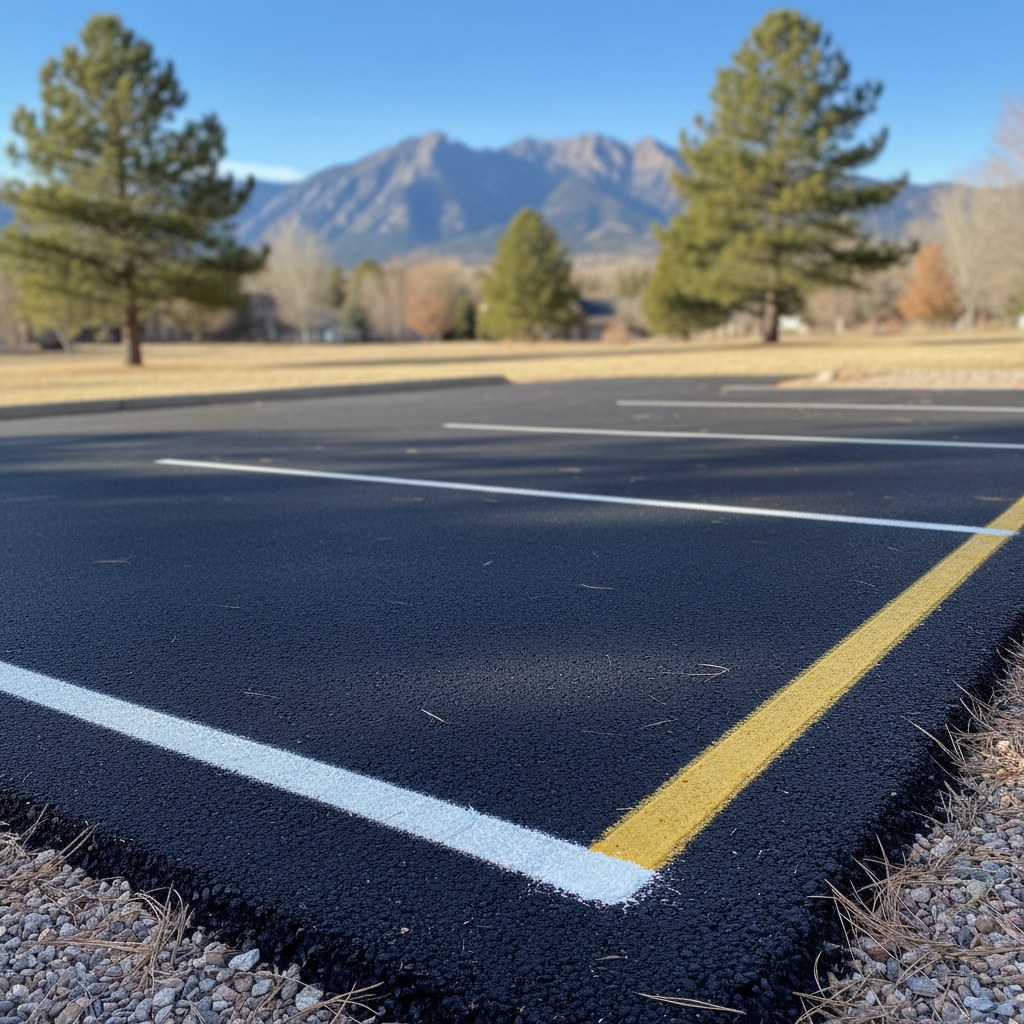
Alright, let's talk about driveway striping. You've got a fresh sealcoat on your asphalt, or maybe you just want to tidy up the look of your parking area. It's a common thought for homeowners: "Can I just stripe this myself?" The short answer is, yeah, you can, but there are some big differences between a quick spray job and something that looks professional and lasts. I've seen a lot of driveways around Boulder, from the flat, wide ones in Gunbarrel to the steeper, more compact spaces up in the foothills, and the same principles apply.
Before You Even Think About Painting
First things first, you need a clean surface. I'm not talking about just sweeping it. You need to power wash that asphalt until it's spotless. Any dirt, dust, loose gravel, or oil will mess with your paint adhesion. If you've got moss or weeds growing in cracks, get rid of them. Use a good commercial-grade degreaser if there are oil stains. Let it dry completely – and I mean completely. In Boulder, with our dry climate, that usually doesn't take too long, but if it's been a wet spring, give it an extra day. You don't want any moisture trapped under that paint.
Next, consider the condition of your asphalt. Is it brand new? Has it been sealcoated recently? Paint sticks best to a fresh, clean sealcoat. If your asphalt is old, faded, and full of cracks, striping it might be like putting lipstick on a pig. It'll look better for a minute, but it won't hide the underlying issues. If your driveway is in rough shape, you might want to consider resurfacing or a fresh sealcoat first. Boulder Asphalt Pros can certainly help you assess that.
DIY vs. Calling a Pro: Where to Draw the Line
For a simple, straight line on a small, flat driveway, you can absolutely do it yourself. You'll need a few things:
- Good quality striping paint: Don't skimp here. Get paint specifically designed for asphalt. It's more durable and resistant to fading and cracking.
- A striping machine: You can rent these, or buy a basic one if you plan on doing this regularly. It's essentially a wheeled sprayer that keeps your lines straight and consistent. Trying to do it with a can of spray paint and a steady hand? Good luck. It'll look wobbly and amateurish, trust me.
- Chalk line or string: For marking your lines accurately.
- Measuring tape: To ensure proper spacing, especially if you're marking parking spots.
- Safety gear: Gloves, eye protection, and maybe a mask if you're sensitive to paint fumes.
Now, if you're dealing with anything more complex – multiple parking spots, handicap symbols, directional arrows, or a large commercial lot – that's when you should really call in the pros. We've got industrial-grade equipment that lays down perfectly crisp, uniform lines quickly. We also know the local codes for things like ADA compliance, which is crucial for businesses but can also apply to multi-family residential properties. Plus, we've got the experience to make sure the paint lasts through our harsh Boulder winters and hot summers.
During the Striping Process (DIY Tips)
Okay, you've decided to tackle it yourself. Here's what you do:
- Plan your layout: Use your chalk line to snap out your desired lines. Measure twice, paint once. If you're doing parking spots, make sure they're wide enough for modern vehicles. A typical parking spot is 9-10 feet wide and 18-20 feet long.
- Load your machine: Follow the manufacturer's instructions for your striping machine and paint.
- Practice: If you've got an inconspicuous spot, do a test run. Get a feel for the machine's speed and spray pattern.
- Start striping: Walk at a slow, consistent pace. Overlap your passes slightly to ensure full coverage. Keep an eye on your chalk line. Don't rush it.
- Take breaks: If it's a hot day, the paint might dry faster, but you'll also get tired. Take a breather and check your work.
After the Paint Dries
Once you're done, let that paint cure completely. This usually takes 24-48 hours, depending on the paint type and weather conditions. Don't drive on it too soon, or you'll track paint all over your nice, clean asphalt. You'll want to keep an eye on your new stripes over the next few months. Our intense UV exposure here in Boulder can be tough on paint, so a good quality product is key.
If you notice any fading or chipping after a year or two, you can always touch them up. But if you're seeing widespread issues, it might be a sign that the surface wasn't prepped correctly or the paint wasn't ideal for our climate. For a truly durable, long-lasting finish that stands up to everything from snowplows to scorching sun, sometimes it's just better to let the local experts handle it. Give Boulder Asphalt Pros a call if you need help with your driveway or parking lot striping – we're always happy to give you an honest assessment and a fair quote.